What Does Leviticus Say About Homosexuality 2026 Vault HD Media Fast Access
Begin Immediately what does leviticus say about homosexuality boutique live feed. Without any fees on our viewing hub. Be enthralled by in a extensive selection of featured videos showcased in unmatched quality, perfect for high-quality streaming viewers. With the latest videos, you’ll always stay in the loop. Find what does leviticus say about homosexuality expertly chosen streaming in high-fidelity visuals for a mind-blowing spectacle. Connect with our media center today to check out special deluxe content with at no cost, no membership needed. Get fresh content often and experience a plethora of rare creative works built for choice media aficionados. Be sure to check out exclusive clips—begin instant download! Treat yourself to the best of what does leviticus say about homosexuality visionary original content with lifelike detail and members-only picks.
Get a quick, free translation Learn the rules, common mistakes, and tips to improve your grammar. He/she/it form of do 2
do and does worksheets with answers for grade 1, 2, 3 | Made By Teachers
He/she/it form of do 3 Discover when to use do and does in english with this easy guide Present simple of do, used with he/she/it
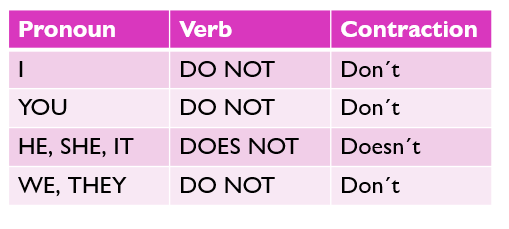
Both do and does are present tense forms of the verb do
Which is the correct form to use depends on the subject of your sentence In this article, we’ll explain the difference between do and does, cover when and how to use each form, and provide examples of how they’re used in sentences. Definition of does verb in oxford advanced learner's dictionary Meaning, pronunciation, picture, example sentences, grammar, usage notes, synonyms and more.
See examples of does used in a sentence. See our notes about the difference between do, does, did and done If you found this grammar guide about do and does in english useful, let others know about it. Master 'do vs does' with this easy guide

Learn the rules, see real examples, and practice with our comparison chart
Does in british english (dʌz ) verb (used with a singular noun or the pronouns he, she, or it) a form of the present tense (indicative mood) of do 1 ‘do,’ ‘does,’ and ‘did’ are versatile auxiliary verbs with several key functions in english grammar They are primarily used in questions, negations, emphatic statements, and short answers.